A henna celebration can carry personal, family and cultural meaning. Choosing a dress begins with understanding the occasion you are planning, rather than following an assumed rule about colour or decoration. A useful palette connects the atmosphere of the gathering with the expression you want the dress to have.
Begin with your own context
UNESCO's listing of henna rituals, aesthetic and social practices was inscribed in 2024 through a multinational nomination. The recognition concerns a living cultural practice. It should not be read as prescribing a single outfit, palette or way of celebrating for every family and community.
Ask the people involved in your occasion about any preferences or traditions that matter to them. Then distinguish these from choices that are simply visual. This makes room for meaningful details without turning a broad idea of heritage into a set of design assumptions that may not belong to your celebration.
Context: UNESCO — Henna: rituals, aesthetic and social practices.
Choose a colour relationship
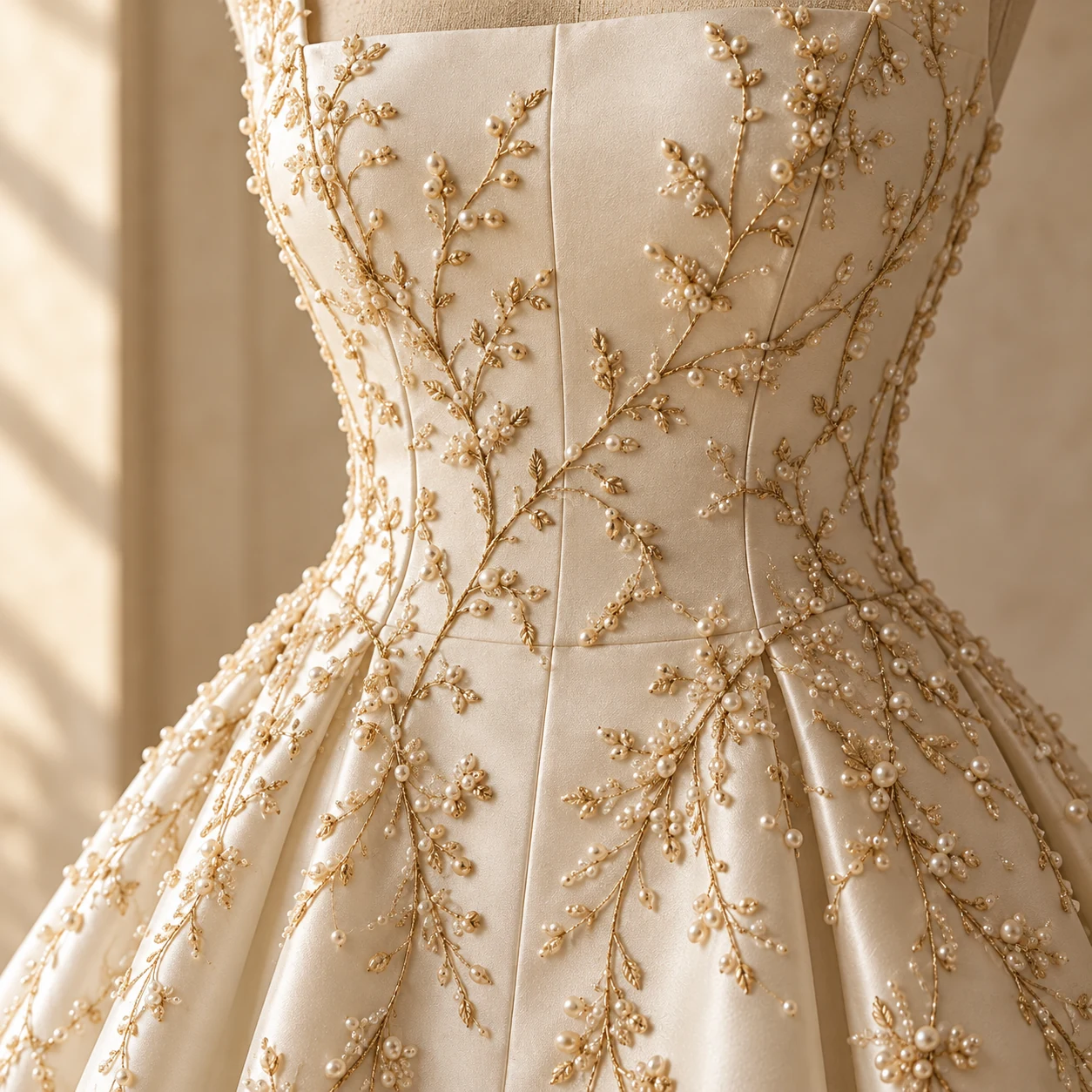
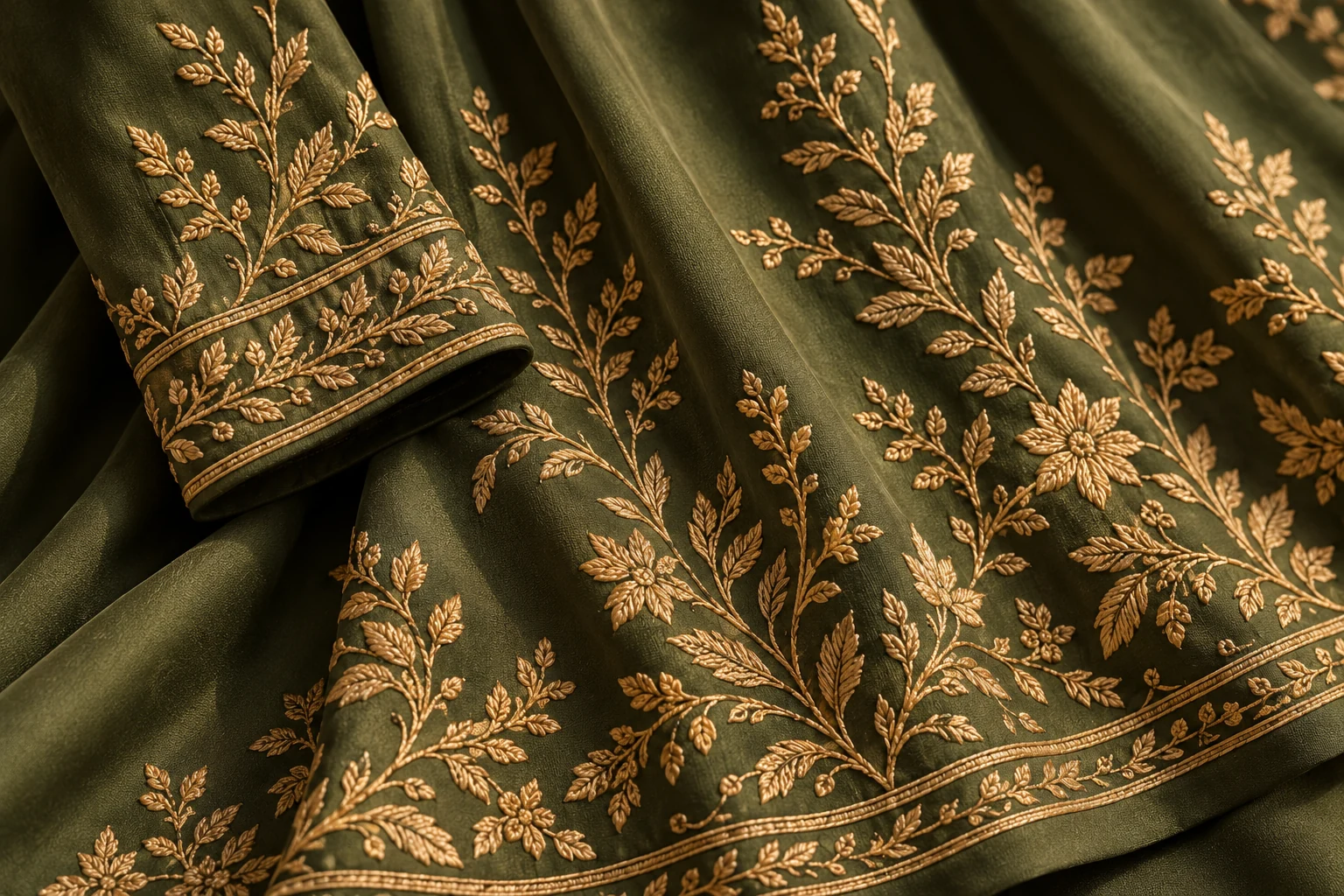
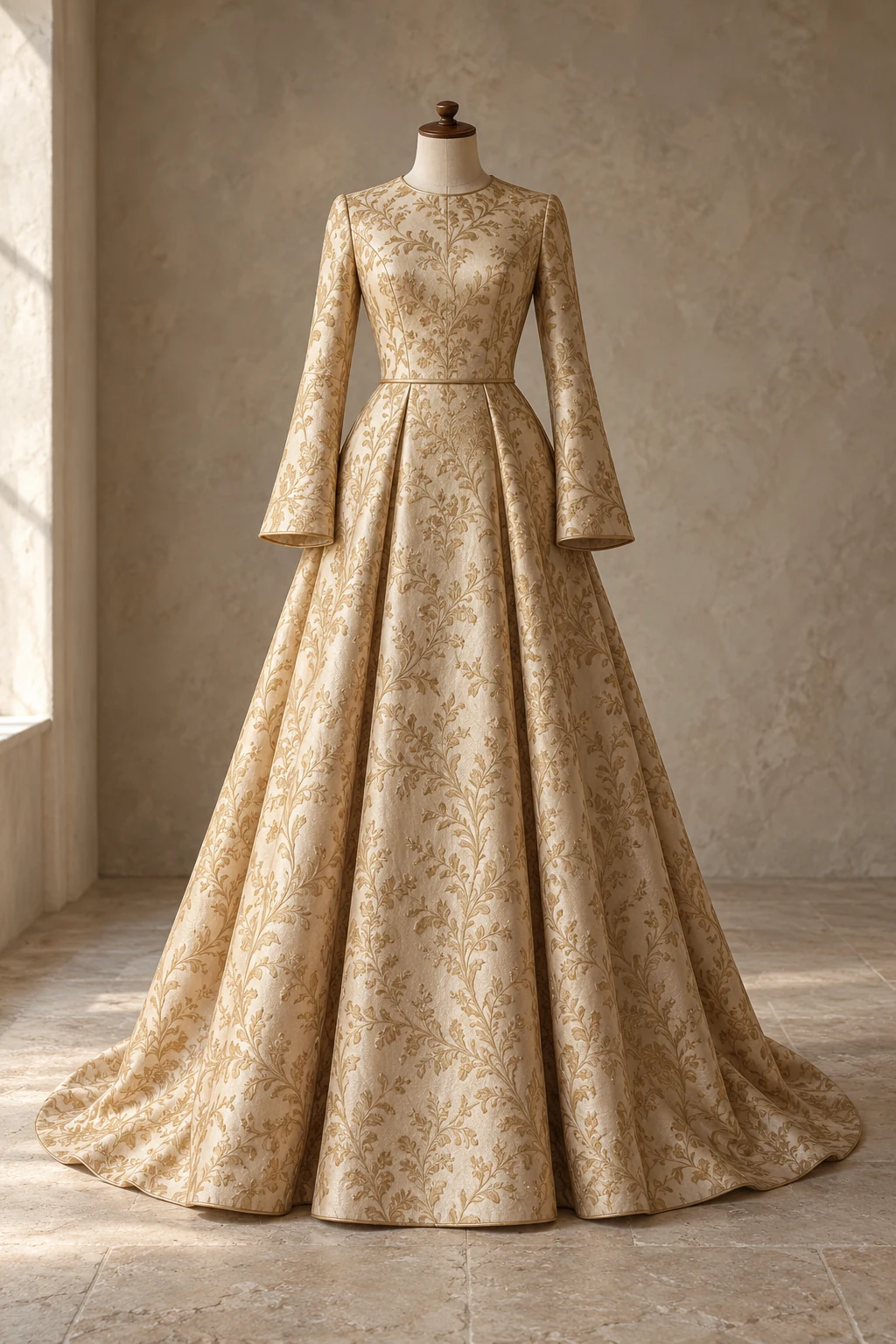
Think about the main dress colour and the tone of its detail together. Deep olive with gold embroidery feels different from champagne with a woven motif, even when both sit within a warm palette. Compare the relationship between the colours rather than deciding that more contrast is always more expressive.
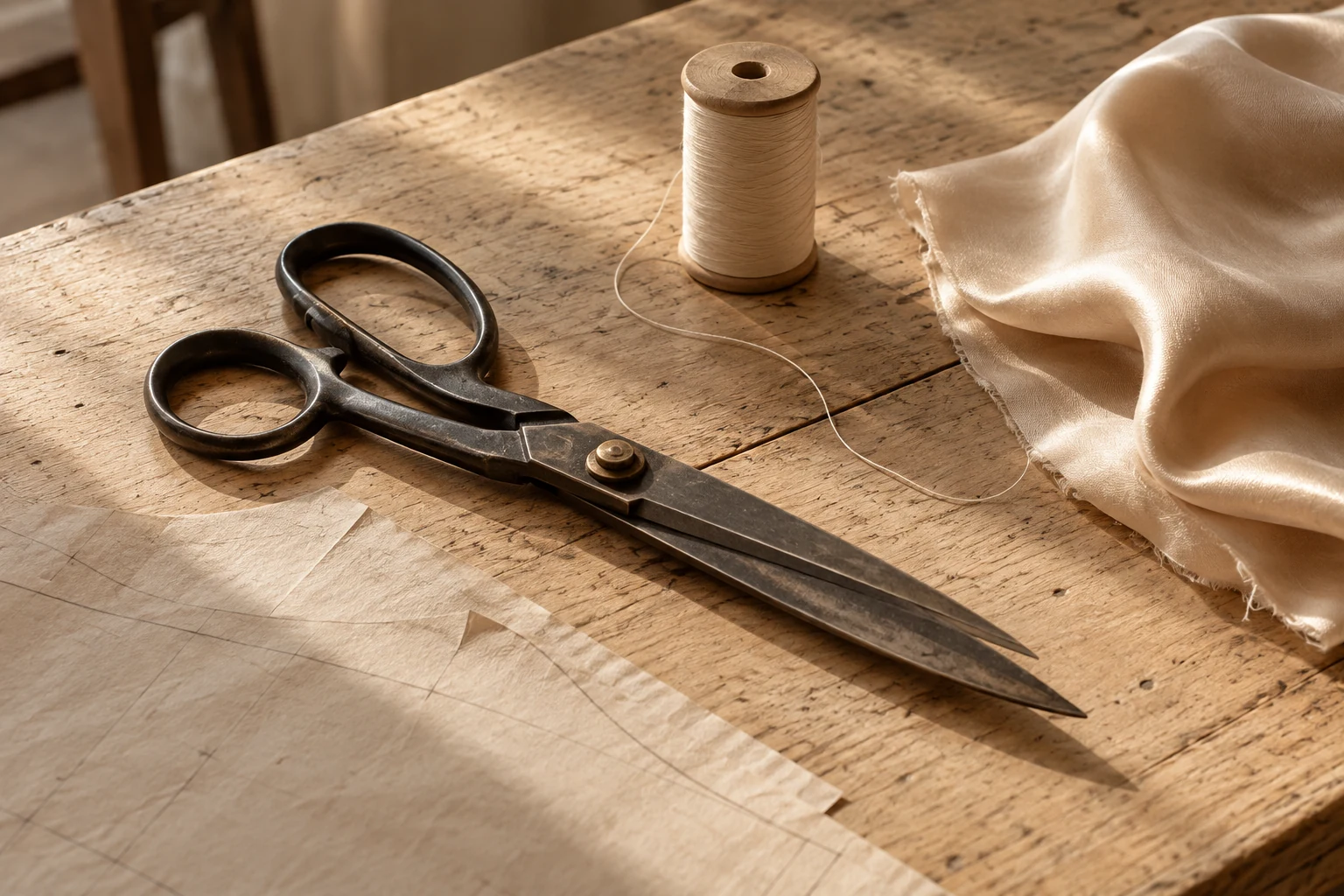
Include the setting in the discussion: the backdrop, the room and the light you expect. These do not need to match the dress exactly. They can help you recognise the mood you want. If possible, look at fabric and thread samples together before deciding whether a photograph captures that mood accurately.
Give embellishment a clear role
Decide whether the detail should frame the neckline, travel through the skirt or concentrate at the cuffs and hem. A motif becomes easier to evaluate when you know where it sits. Dense embroidery and a restrained outline are both valid directions; the choice is about the balance you enjoy.
If a motif has a personal or cultural significance, explain it and discuss how it should be represented. Do not assume that a decorative shape is interchangeable with a meaningful symbol. A small, carefully considered element can communicate more than covering the dress with several unrelated patterns.
Remember the shape and the evening
Colour and embroidery are only part of the garment. Consider sleeve movement, skirt volume and the space you will use during the celebration. Share any coverage or comfort preferences at the beginning. The design should make sense as a dress you will wear, as well as an image you enjoy looking at.
To prepare an enquiry, bring the date, your preferred palette and one or two references with explanations. The Farfalla henna collection offers different colour and surface studies to start that conversation. Use them to identify a direction, then discuss what will make that direction relevant to your own occasion.