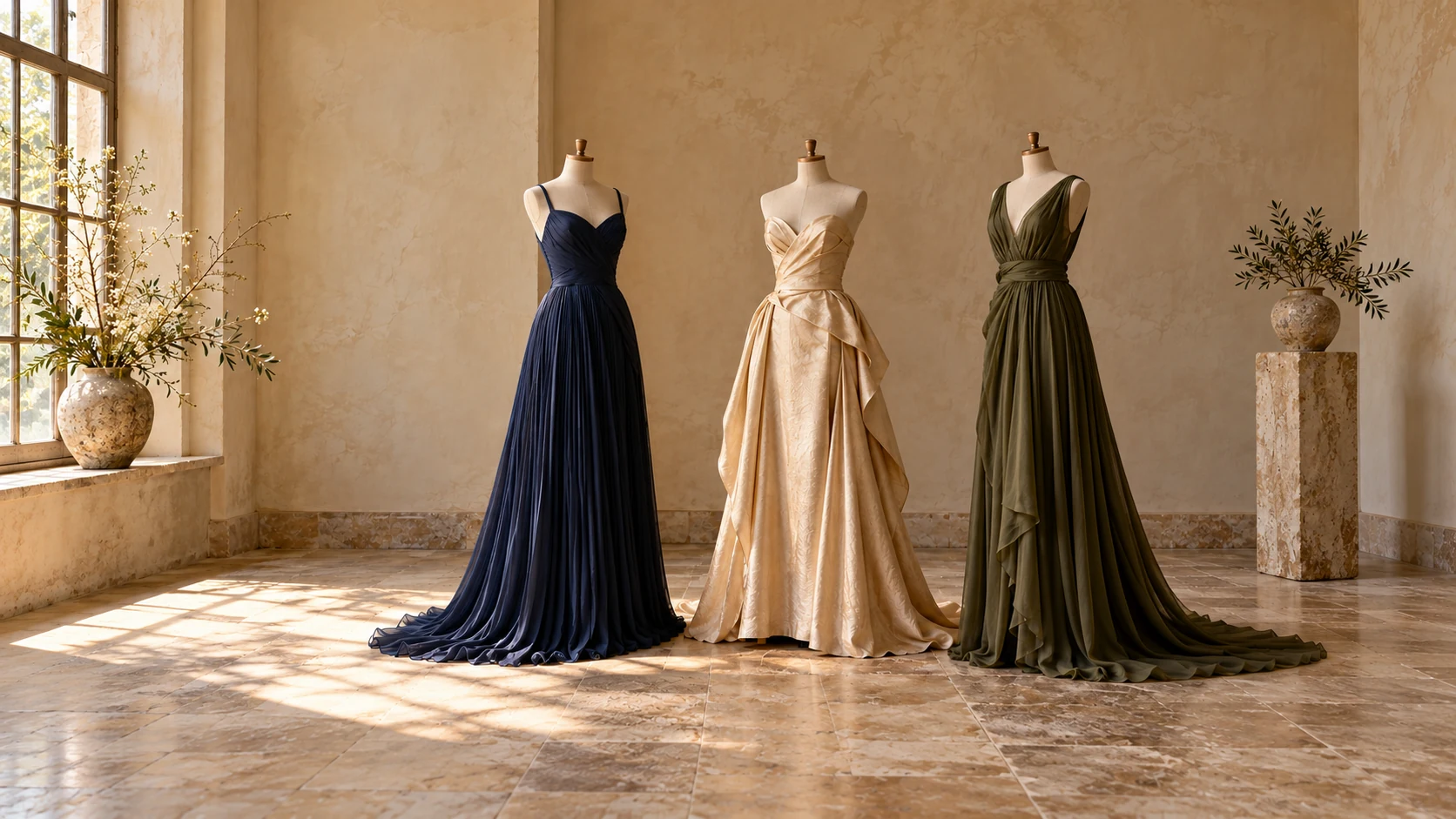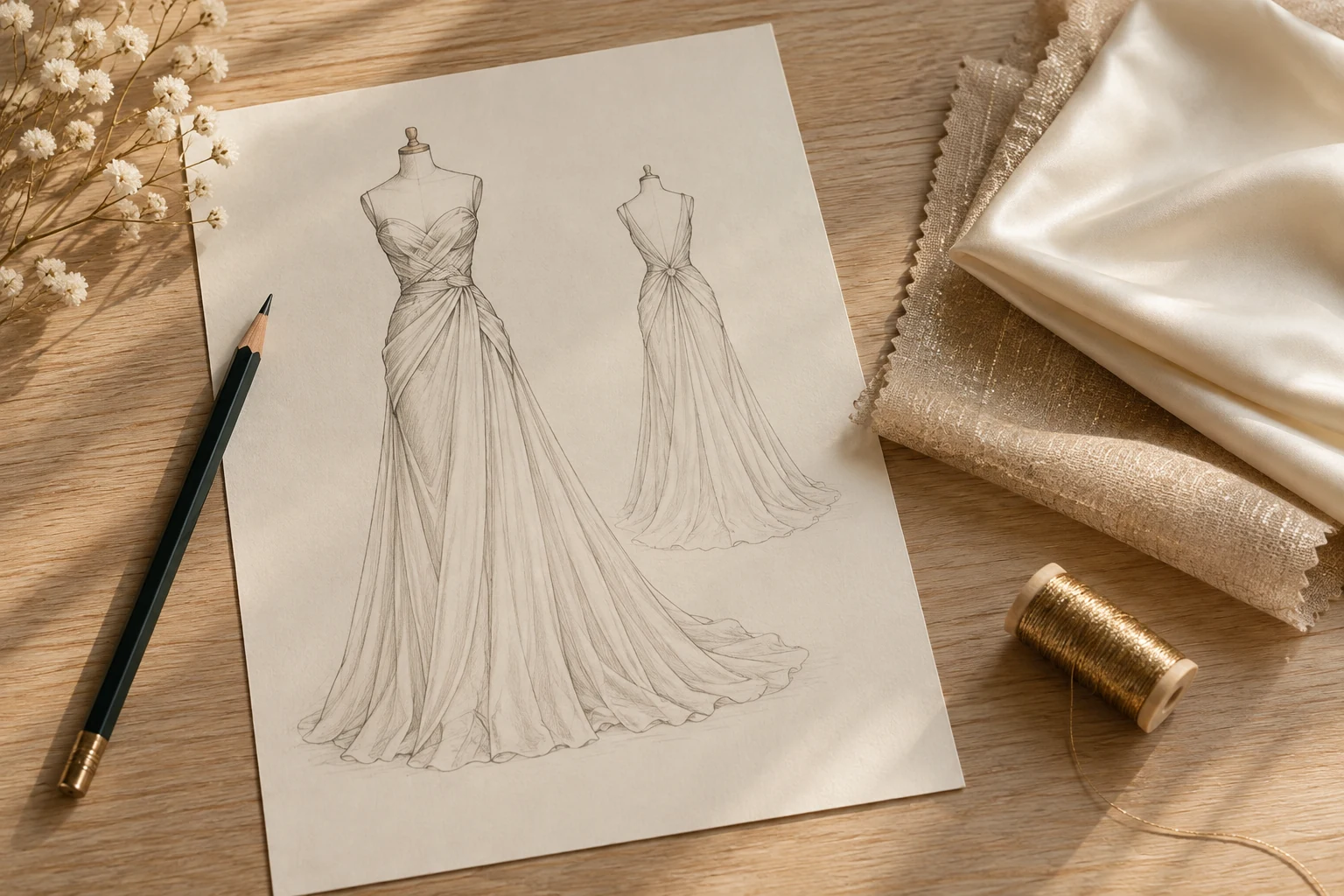
A try-on is a chance to learn how a dress behaves, not only to decide whether you like its reflection. Give yourself a small set of observations to work through. This helps you distinguish the visual choices you enjoy from practical details that need a conversation with the maker.
Bring the relevant pieces
Ask what the appointment requires and bring the shoes or accessories that may affect the final look. If they are not yet chosen, explain that rather than guessing. A hem assessed with one shoe height may need another discussion if the footwear changes; keep the maker informed before a finishing decision is made.
Write down your strongest design preferences beforehand. It is easy to focus on a new detail in the moment and forget what mattered when you started. A brief note about coverage, movement and silhouette can keep the try-on useful without turning it into a rigid checklist that prevents the design from developing.
Look from more than one direction
Begin with the overall line, then look at the neckline, waist and hem. Observe the back and side as well as the front where that is possible. Rather than diagnosing construction yourself, describe what you notice and ask the maker whether it is part of the intended design.
The V&A's Balenciaga construction studies illustrate how much of a garment's visible effect can depend on pattern cutting and the treatment of fabric. For a try-on, this supports a useful habit: ask how a line is intended to behave instead of assuming every unfamiliar fold needs to be removed.

Move in ways the event will require
Walk, sit, stand and gently make the movements you expect during the occasion, as appropriate for the appointment. Notice whether you repeatedly adjust a sleeve or neckline. Say where and when the adjustment happens. Specific observations are easier to discuss than a general feeling that something is not right.
Consider the space the skirt, cape or train needs around you. A dress can be comfortable while still requiring deliberate handling. Ask how it should be managed and decide whether that suits the evening you have planned. There is no obligation to prefer either the most dramatic or the most minimal option.
Leave with clear next steps
Confirm which changes, if any, have been discussed, which choices remain open and how the next stage will be communicated. Ask about the actual schedule rather than applying a standard number of appointments from another experience. Keep a record of agreed details so the conversation remains consistent.
If photography is permitted, use images to remember decisions, not as the only measure of fit. Note any remaining questions and raise them before final finishing. A useful try-on ends with a shared understanding of the garment and the next step, rather than a rushed decision made because the appointment feels nearly over.