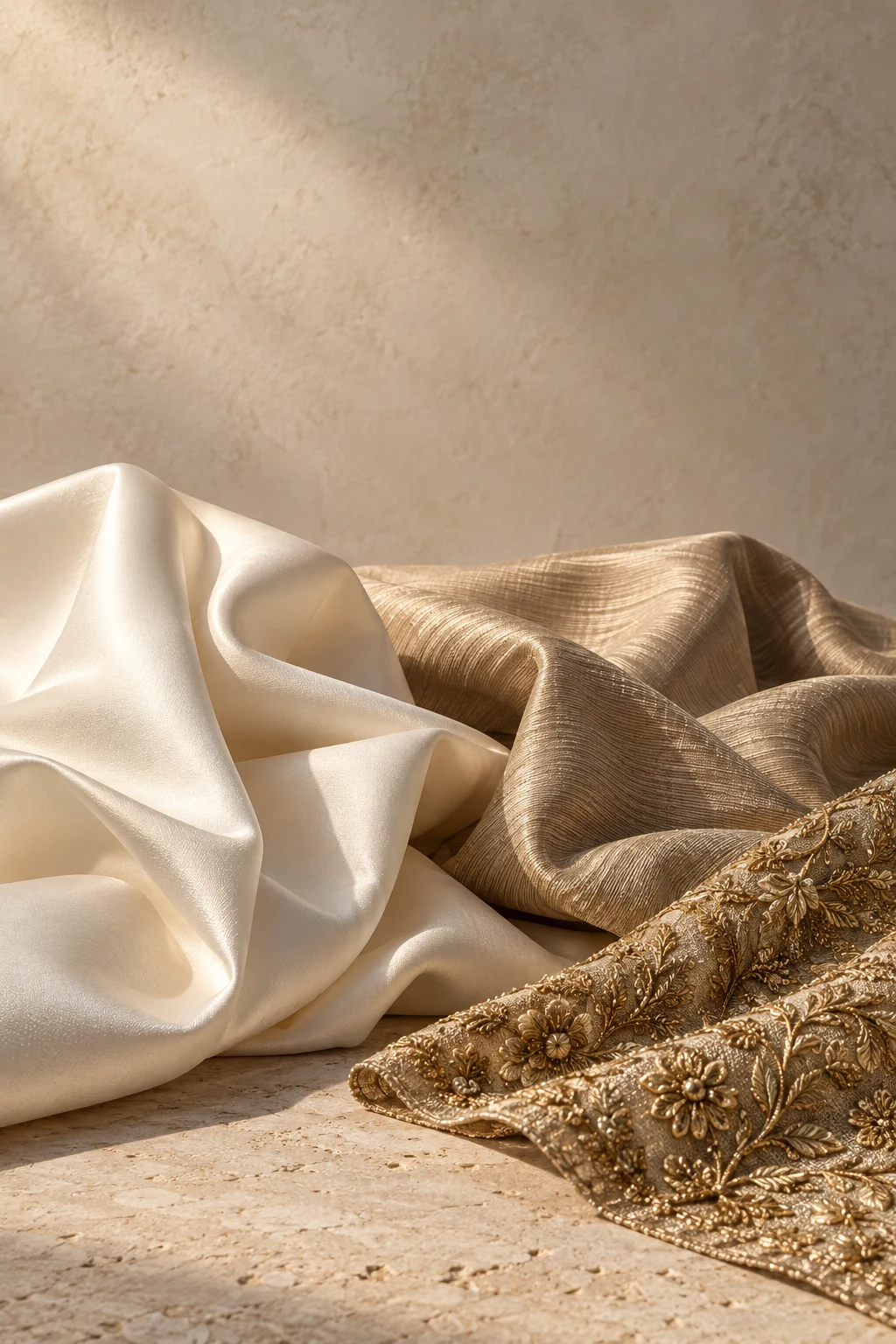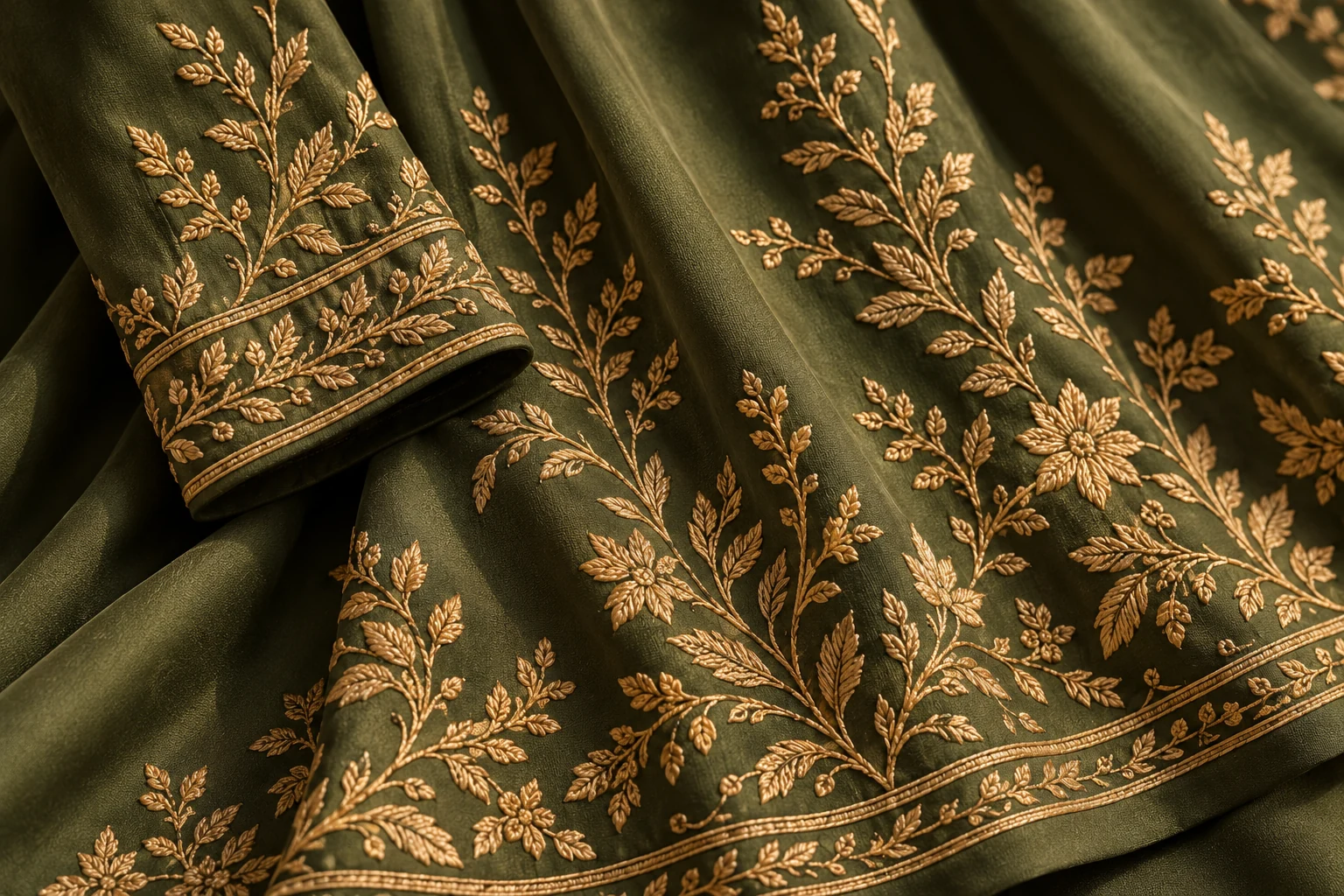

The first thing you notice about a dress may be its colour. The thing that stays with you is often its shape. Reading a silhouette means looking at the outline, the placement of volume and the way one part of the garment leads into another before deciding whether you want more decoration.
Start with the outline
Look at the dress from a distance, or imagine the image without the embroidery and colour. Does the skirt widen gradually from the waist? Does it remain close to a long vertical line? Does most of the volume sit below the hip or around the shoulders? These observations give you a language for discussing the design.
An A-line, a column and a fuller skirt can all be expressive. The useful question is which proportion you enjoy and how it fits the setting. Avoid treating one silhouette as universally flattering. Your preferences, the construction of the actual garment and your experience wearing it matter more than a fixed rule.
Notice where the fabric is directed
Gathering and draping guide attention. A diagonal fold can connect a shoulder to the waist; a fabric panel can create a focal point at the hip. Rather than counting these details, follow their direction. Ask whether they reinforce the overall line or compete with the neckline and skirt.
The V&A's study of Balenciaga shows how pattern cutting and the manipulation of fabric can create sculptural form. Some examples rely on the fabric's structure to stand away from the body. The general lesson is that a striking outline may come from construction rather than added ornament.

Think about the dress in motion
A photograph captures a moment, while an occasion involves many movements. Imagine entering a room, sitting at a table and walking through a doorway. A cape, train or broad skirt adds another element to these actions. Ask to understand how the proposed design behaves, rather than judging movement from a still image alone.
Compare the appearance you want with the amount of fabric you enjoy managing. You may love a strong skirt shape but prefer a shorter train, or want a dramatic neckline with a quieter hem. Describing these trade-offs is a constructive part of the design conversation, not a compromise in personal taste.
Use shape to edit the rest
Once you understand the silhouette, consider what jewellery, hair arrangement or wrap will sit near it. A sculptural shoulder already has a visual role. A broad folded waist may need little else nearby. You can choose to add another focal point, but make the choice consciously rather than automatically.
Use the Farfalla evening pages as studies in different lines: a draped column, a velvet trumpet or a cape over a simple shape. Open the full garment view first and then the detail photograph. Compare what you notice at each distance. Your preferred balance often becomes clearer when you look at both.