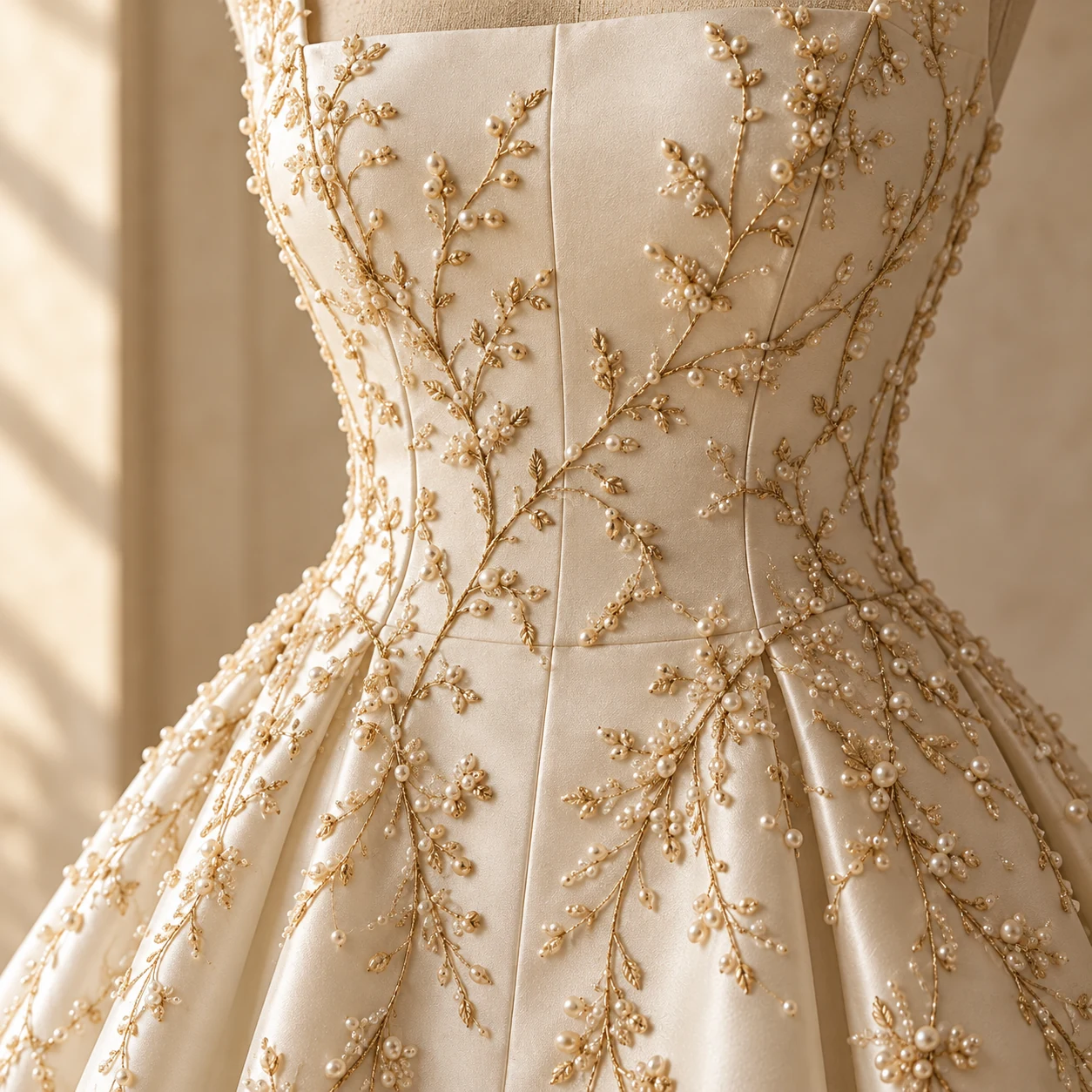
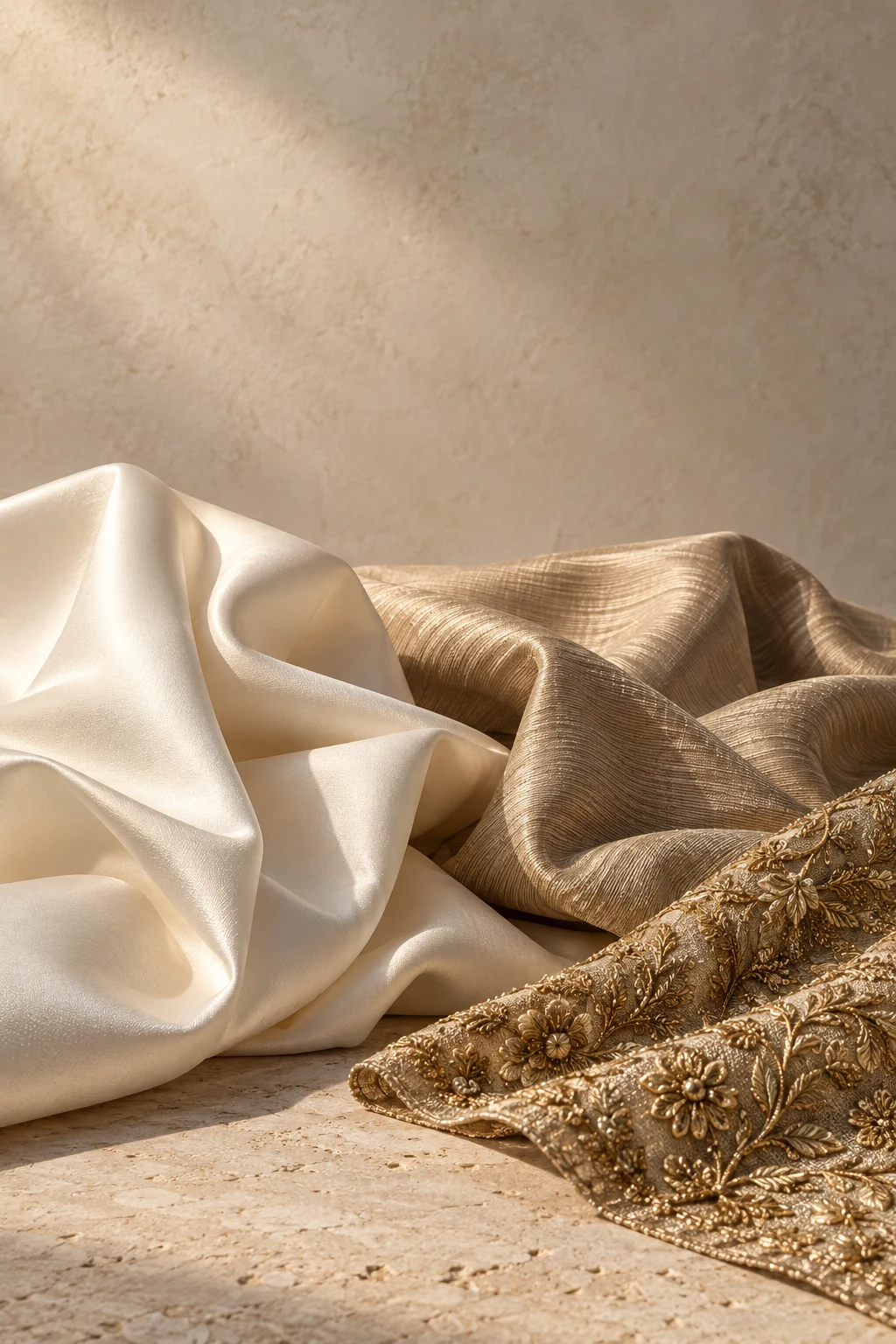
A material can look luminous, structured or soft in a photograph, but those impressions do not describe everything about it. When choosing a dress, move beyond a single fabric name and ask about the actual sample. Surface, weight, composition and construction work together to produce the effect you see.
Separate fibre from construction
Silk describes a fibre; satin describes a weave. The Museum of Fine Arts Boston's CAMEO reference explains that satin has long thread floats and may be made with silk, cotton or manufactured fibres. A satin appearance therefore does not, by itself, establish a garment's fibre composition.
This distinction makes an enquiry more precise. Instead of asking only whether a dress is satin, ask what the fabric is made from and how it is constructed. If composition matters to you, confirm it with the maker. A visual description on a design page is not a substitute for the specifications of a finished garment.
Context: MFA Boston — CAMEO: Satin.
Look at the surface under more than one light
A smooth surface can make a fold conspicuous, while a more textured surface may soften its appearance. Compare a sample where highlights and shadows meet. Look at it near the colours you plan to wear with it, rather than judging it against a screen background or in isolation.
Photographs are useful for identifying a direction, but screens and lighting can change how colour appears. Ask to see the proposed material where possible. Treat words such as champagne, ivory and midnight blue as descriptions to discuss, not promises that every fabric carrying the name will look identical.

Ask what the weight is doing
Imagine the same outline made in two different samples. One may hold a defined fold, while another may fall closer to the body. The design and its underlying construction also contribute, so there is no simple rule that a certain fibre always creates a particular silhouette.
Talk about the result you want: a skirt with shape, a softly moving panel or a clean long line. Then ask which sample and construction can support that direction. This is more useful than selecting a material because its name sounds luxurious and expecting the rest of the dress to resolve itself.
Read the whole piece, including the inside
A dress is more than its visible outer cloth. Ask about lining, the finish at the neckline and any support needed for the proposed design. You do not have to make technical decisions yourself; you do need to know whether a feature you value has been considered in the finished piece.
Care belongs in the same conversation. Before committing to a material, ask how the actual dress should be cleaned, transported and stored, especially when there is embroidery or a structured bodice. The best sample is one that supports your design direction and the practical life you expect the dress to have.