
A neckline can give a dress its character before the skirt enters the conversation. Its shape changes the line around the shoulders and the space available for other details. The most useful way to choose one is to consider the complete design and the way you want to wear it.
Describe the line you are drawn to
Begin with observations instead of a label. You may like a clean horizontal edge, a curved open shape, a high quiet line or one shoulder becoming the focal point. These descriptions help the designer understand your preference even if you are unsure of the technical name for the neckline.
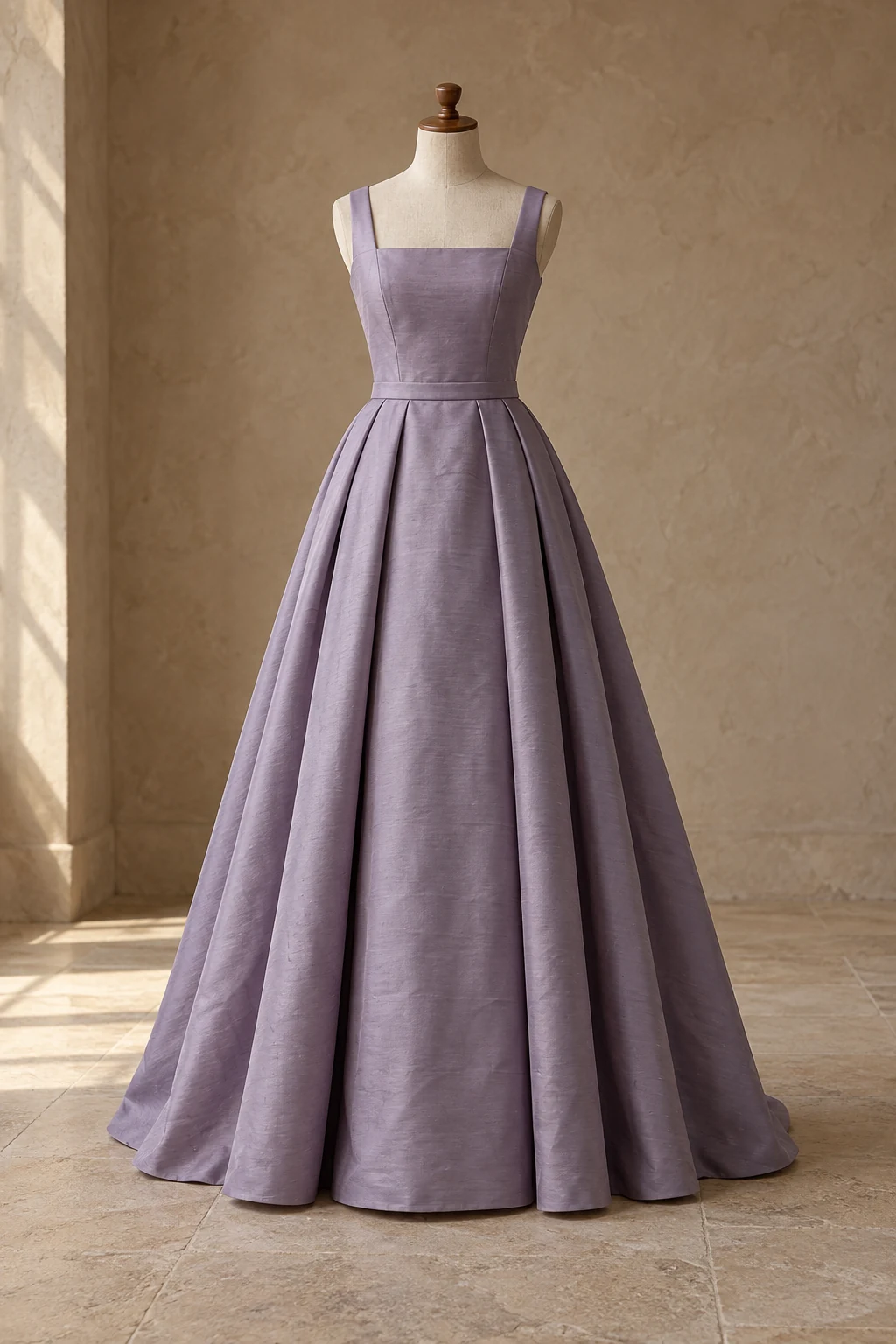
Compare a few references with different skirts. A square neckline above a full skirt makes a different composition from a similar neckline on a long column. Ask which part of the reference you actually want to keep. Often it is a relationship between two elements, rather than an isolated detail.
Include sleeves and shoulder details
A sleeve, cape or strap is part of the same upper composition. A wide strap adds a line; a cape introduces movement; a folded shoulder can carry much of the dress's expression. Consider how these elements meet the neckline and whether they leave the amount of open space you prefer.
The V&A's construction studies include a Balenciaga cape whose neck was carefully pieced to achieve its soft line. This is a useful example of a visible simplicity supported by deliberate making. It does not mean your dress needs the same technique; it means the edge you notice deserves a construction conversation.
Make room for practical preferences
Think about sitting, greeting people, reaching forward and wearing the dress with the accessories you intend to use. Discuss your preferred coverage and support before the design is settled. If you frequently adjust a certain neckline in clothes you own, explain that experience rather than hoping a new version will feel different.
At a fitting or try-on, notice whether the neckline stays where you expect it to stay. Ask the maker about any adjustment you find yourself making. Fit should be assessed in the actual garment: a photograph cannot confirm comfort, support or the way an edge sits when you move.
Decide what belongs near it
Bring the hair arrangement, earrings and any necklace into the picture. You may prefer a quiet neckline with more prominent jewellery, or an expressive neckline with very little beside it. Neither approach is mandatory. The aim is to know which element you want people to notice first.
Save one reference showing the neckline clearly and another showing the complete dress. When you enquire, explain both what you like and what you want to avoid. That small piece of preparation makes the discussion more focused and gives the neckline a place within the design, rather than making it a separate decision.